

You wake up one morning, grab your coffee, and walk outside. There it is. A fox. Sitting in your yard and staring at you like you are disturbing its breakfast. Now what do you do? Freak out? Call someone?
Take a deep breath. Foxes generally don’t care that you exist. Seeing a fox in your yard is fairly normal. In fact, in most situations it isn’t a problem at all.
Why Are Foxes Showing Up in My Neighborhood?

Foxes have learned that neighborhoods equal food. Garbage cans. Pet food outside. Fallen fruit…and on and on. Humans have provided a smorgasbord for foxes, if you will. They also dine on birds, mice, and other small rodents. The point is, if your yard is attracting any of the above, a wild fox will eventually visit.
Nine times out of ten, a fox is just passing through your yard. They are cutting across to get somewhere else. They are not threatening your safety.
Are Foxes Dangerous to Humans?

No. Foxes rarely attack people. They are naturally afraid of us and will run at the first sign they hear you coming.
If a fox doesn’t flee as you approach it, there’s a good chance someone is feeding it. Foxes can lose their instinct to fear people and act very boldly. Like coming right up to you, bold. Just make a lot of noise. Yell. Clap your hands. Stomp your feet. It will run off quickly.
Foxes and Pets: What You Should Know
Most dogs and adult cats are safe around foxes. Foxes rarely pick a fight with a cat. Cats are tough and roughly the same size as a fox anyway.
Smaller pets are a different story:
- Kittens and cats under five pounds face real risk
- Watch Your Little Dogs When They’re Outside
- Foxes love rabbits, guinea pigs, and chickens. If you have any of these as pets, please read our full article.
Bring Small Pets Indoors at Night. It’s the simplest, safest option for your pet.
Found a Fox Den Near Your House?
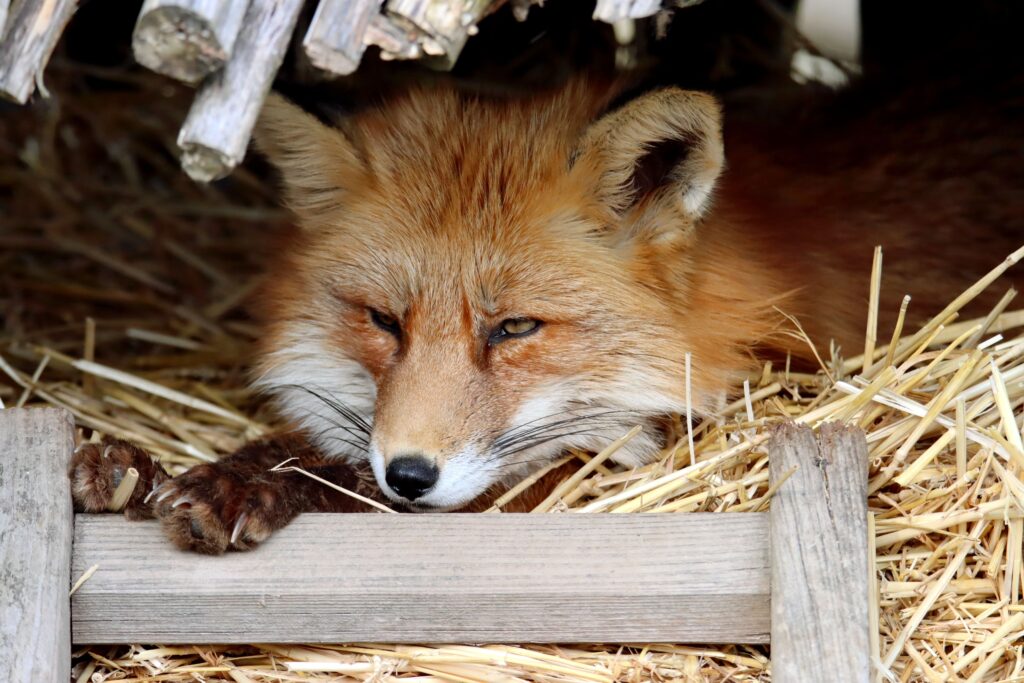
When you discover a fox den beneath your porch or in your shed, it can be upsetting. But the situation isn’t hopeless! Fox kits are only around during the springtime. Most are born in March or April. Around nine weeks old, they begin to venture away from their den. If you can wait it out, they’ll leave on their own accord.
If you need them removed sooner, follow these harmless tips:
- Stuff leaves or mulch loosely into the den opening
- Leave smelly items near the entrance, like used kitty litter or old, sweaty socks
- Hang shiny balloons or reflective tape close to the den
- Sprinkle capsicum-based repellent around the area
The goal is to make the fox family feel unsettled. The mother fox will then move her kits to a safer spot. Once they’re all out, block the area with buried hardware cloth to stop them from coming back.
Rabies and Mange: Know the Warning Signs
Foxes can get rabies, but it’s rare. The fox strain has rarely been transmitted to humans in the US. Still, know the warning signs:
- Stumbling or circling like it’s dizzy
- Legs that look weak or won’t work right
- Acting aggressively with no clear reason
- Acts too calm and shows no fear
See those signs? Don’t go near the fox. Don’t try to help it yourself. Call your local animal control right away.
Mange is another condition to watch for. A fox with mange loses fur in patches and scratches nonstop. It looks rough and worn out. If you spot one like that, contact a local wildlife rescue group. They can get the help they need.
Fox Safety Tips: Keep Foxes Out of Your Yard
- Don’t feed foxes. This will only encourage them and cause them to associate humans with food.
- Remove brush piles and debris from your yard.
- Clean up pet waste so foxes are not attracted to it and sniff around.
- Secure your trash in closed containers.
- Install a motion-activated sprinkler near gardens.
When to Call for Help
In most cases, you will never need to contact a professional for a fox. That being said, if you are continually noticing the same fox around your home or property, or if the fox appears injured or sick, you should contact a wildlife professional. Another exception would be if you have a fox den located on your property that is causing extreme issues. Give a local wildlife removal company a call. They will be able to assist you and humanely handle your backyard wildlife problem.
Foxes are normally just investigating and moving through your property. Give them their space, and they will leave on their own.