
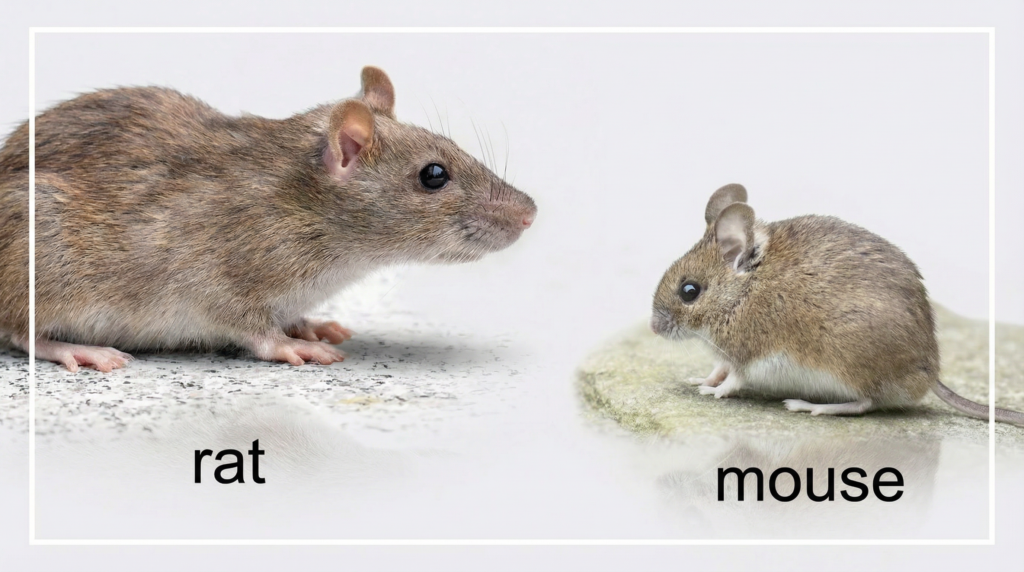
I am sure most of you may have thought that rats and mice are the same. But they are not. There are some differences between the two. They look very similar to each other, but they leave clear signs behind. And once you spot them, you’ll know what you’re dealing with.
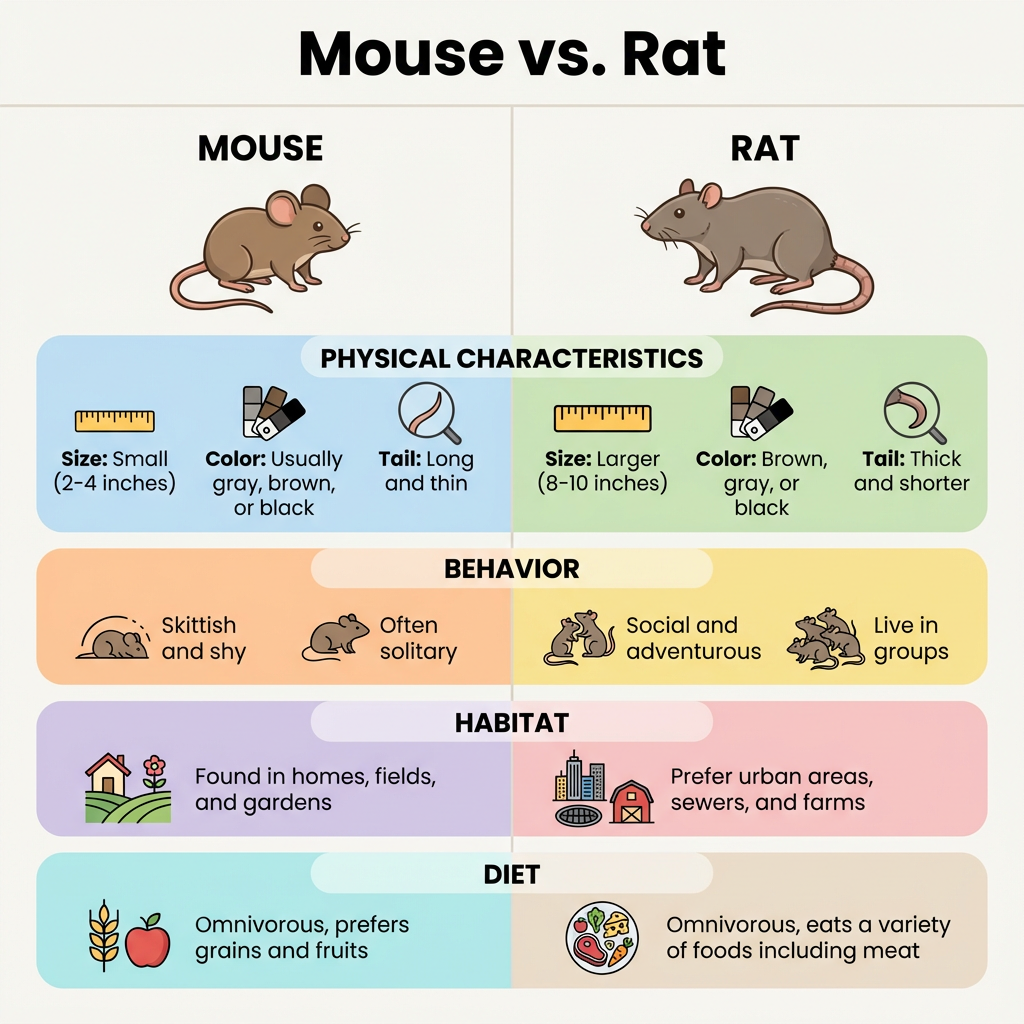
Size Matters A Lot
Let’s start with the size. Rats are the bigger roommate you did not invite. They can stretch about 16 inches long with the tail and can even weigh around 14 ounces.
Mice, on the other hand, are small and fast. They usually max out at 8 inches long, including the tail, and weigh less than an ounce. Their ears also seem big for their head. Their snout looks sharper, too. It can look harmless and cute until you find chew marks in your pantry.
Next up are their tails. Rat tails look thick and scaly. And the mouse tails look thin and narrow. Tail length helps too. A mouse’s tail is about the same length as its body. A rat’s tail is often shorter than its body. And so in this way, you can figure out the difference.
Poop Clues
No one wakes up excited to study droppings. But still, it’s one of the clearest signs you can use, and it saves time.
Mouse droppings look like tiny dark rice grains. They are about ¼ inch long, and the ends look pointy. You often see many in one area. At the same time, mice leave them as they explore and snack.
Rat droppings are larger and easier to spot. They are about ¾ inch long. That’s close to a bean, and they may curve a little too. Fresh droppings from both pests can look dark and shiny. And the old ones may even look gray and crumbly.
Food Thieves With Different Tastes
Their food choices offer clues, too.
Mice usually love grains and cereals. If you find that someone nibbles into your cereal boxes or pasta packages, that could probably be a mouse! They’re lazy diners too, as they eat right where they find food.
Rats, on the other hand, prefer fruits and veggies. If you find missing bananas, tomatoes, or avocados from your counter, that could probably be the rats! They also need lots of water daily, and so pet water bowls might show signs of visitors.
Behavior Patterns
Mice are basically creatures of habit. They build nests close to food sources and rarely venture more than 10-30 feet from home. They’re also neat freaks who often groom themselves.
Rats, on the other hand, are bold explorers. They can travel over a mile in! They’re also neater than mice and follow the same paths along walls night after night. And for this reason, they usually leave dark and greasy marks from their fur.
Other Telltale Signs
Look for these additional clues:
- Gnaw marks – Mouse teeth leave tiny marks about ⅛ inch. Rat teeth leave larger, rougher holes. It is usually about the size of a quarter.
- Nests – Mice tear up paper, string, and fabric to make indoor nests. Rats tend to dig outside or nest in attics.
- Sounds – Both can make scratching and scurrying sounds at night.
- Smells – Rats often leave a strong musky odor. A big infestation can stink up a space.
- Pet behavior – Pets often notice rodents before you do. Your dog may sniff one spot over and over. Your cat may freeze and stare at a wall.
Why Knowing The Difference Matters
Getting rid of mice vs. rats takes different moves. Mice can squeeze through holes as small as a dime. Rats, on the other hand, may need openings closer to quarter size. Mouse traps may not stop a big rat. But the rat traps can be too much for a tiny mouse.
Both pests can spread disease. They are also known to damage your home by chewing wires, pipes, and insulation. And both can multiply fast. A female mouse can have up to 10 litters per year, with 5-6 babies per litter.
With this info, you can now easily spot your rodent guest and take back your home.