

Rodents are known to slip into your home through the smallest gaps. They can be very good at finding those small gaps. They can even squeeze through a hole the size of a pencil. Just a quarter-inch. In this article, we will have a look at ways to shut it down and keep your home rodent-free. A gap that is just enough will allow them to go inside. For this reason, in this article, we will look at ways to shut it down and keep your home rodent-free by sealing those entry points.
Where Are Those Pesky Rodents Getting In?
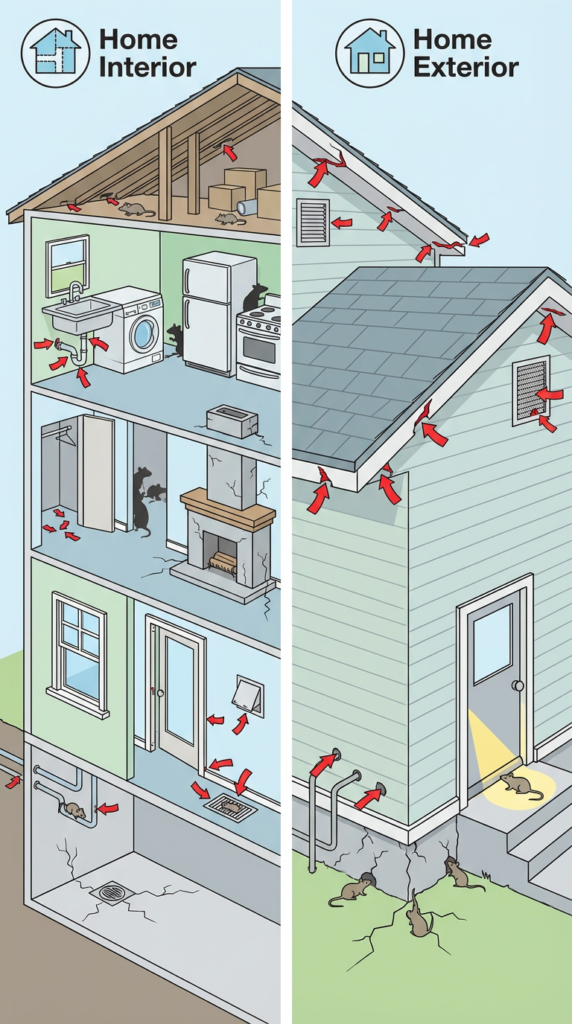
First, act like a detective. First, you need to hunt for every spot a mouse could use. So grab a flashlight and then check these common rodent gateways:
Inside Your Home:
- Around pipes under sinks and washing machines
- Behind kitchen appliances
- Floor areas in closets, especially in corners
- Around fireplace openings
- Door and window frames
- Dryer vents and floor air vents
- Where utility lines enter your home
- Attic spaces and rafters
- Basement corners and floor drains
Outside Your Home:
- Foundation cracks where the house meets the ground
- Roof edges, eaves, and soffits
- Attic and crawl space vents
- Door sweeps with gaps
- Holes for electrical, plumbing, and gas lines
Seal It Up
Once you are done with the above, you need to block those entries! Here’s what you’ll need:
Must-Have Materials:
- Steel wool (medium grade or better)
- Copper mesh
- Wire mesh screens (¼-inch thick)
- All-weather caulk
- Door sweeps
- Vent covers
Handy Tools:
- Wire cutters
- Screwdriver
- Utility knife
- Caulk gun
- Pliers
- Power drill (for bigger jobs)
DIY Rodent Blockade
Tiny Holes and Cracks
If you come across a small opening, grab some steel wool first. They are very effective. Stuff it into gaps, then caulk to hold it in place. Mice really hate chewing through steel wool as it hurts their teeth and gums. And so this is one of the best ways.
Around Pipes and Utility Lines
These can act as a road for rodents into your home! And so you need first to grab some copper mesh, ball it up, and stuff it around pipes where they enter walls. You can also use your screwdriver to pack it in tight. And finally seal with caulk for a finished look.
Drafty Door Gaps
If you can slide a pencil under your door, a mouse can do it too! And for this reason, install door sweeps that sit flush against the floor. You’ll need to keep adjusting until no light shines through. This also helps with energy bills, which is a bonus.
Dryer Vents
These are like rodent welcome signs. Make sure vent flaps close properly and aren’t stuck open with lint. Install a metal vent screen (not plastic because they’ll chew right through it). Try to clean vents regularly to keep them from closing properly.
Foundation Cracks
Cut wire mesh to cover the opening if you have bigger foundation issues, and then secure it with masonry screws if needed. This creates a barrier that even determined rodents can’t breach.
Timing is Everything
Fall can be the perfect time to be rodent-proof. When the temperatures drop, mice and rats start looking for warm winter homes. And so don’t let yours be on their list! Therefore, you need to get these jobs done before the first cold snap hits.
Beyond Sealing
Sealing gaps is just part of the battle. Don’t invite rodents with:
- Open food containers in pantries
- Pet food left out overnight
- Overflowing trash cans
- Woodpiles against the house
- Bird feeders are too close to your home
- Tall grass or brush near your foundation
Also, keep your yard tidy and food sealed up tight, as this gives rodents fewer reasons to check out your newly sealed home.